Being Busy Doesn’t Mean Being Effective: Tips for Smarter Time Management
14.10.2026

Photo: Magnific.com
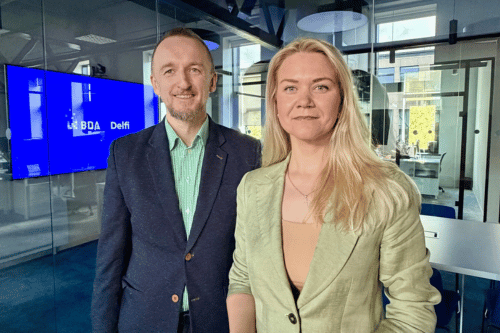
We have access to a wide range of tools and technological solutions, yet getting everything done can feel like an almost impossible mission. Emails, meetings, tasks, and constantly switching from one piece of work to another fill our days. How can we manage our time wisely? What role does changing our habits play, and what do international studies reveal about effectiveness? BDA instructor and an effectiveness coach Dārta Riekstiņa shares practical tips on how we can all become more effective through simple techniques.
Effectiveness Is About More Than Planning Your Workday
Effectiveness is not about being constantly on the go; it is about achieving results. A person can spend an entire day at work, respond to countless emails, attend meetings, and deal with various urgent matters, only to realise at the end of the day that the most important tasks remain unfinished.

Multitasking: The Illusion of Getting More Done

Photo: Magnific.com
There has been plenty of discussion about multitasking. Some people firmly believe it is almost a superpower, while others continue to argue the opposite. So, what is the truth? The answer is quite simple: our brain cannot perform several tasks simultaneously in the way we often imagine. We are simply not wired for that.
Furthermore, research by attention researcher Gloria Mark shows that, when working on a computer, people focus on a screen for an average of just 47 seconds before their attention shifts to something else. If a person switches from one task to another more than 400 times a day, the cumulative loss of time can be considerable.
So, what can someone do if they struggle to concentrate on a single task for an extended period?
Concentration can be trained, and focusing on completing one task properly is key, as it helps reduce mental fatigue.
Effectiveness or Overload: The Key Differences
The main difference lies in the results. If Friday comes around week after week and, when looking back at what I have accomplished, I still cannot quite work out what has actually been done or what progress has been made, despite working through lunch or beyond working hours, it is time to identify the root cause of the problem.
Effectiveness is the ability to assess your priorities and understand what holds the greatest value at a given moment. Changing priorities can also be a sign of effectiveness, but only when the change is deliberate, rather than the result of constantly reacting to tasks that seem urgent but are not necessarily important.
Is Effectiveness a Skill We Can Develop Throughout Our Lives?
Dārta is convinced that effectiveness is a skill we can develop throughout our lives because we are not born with habits; we acquire them as we grow. Like any other skill, effectiveness can become part of our identity and everyday routine. The problem, however, is that we often do not know where to start or how to approach it. One of the most common excuses is a lack of time, but in reality, it does not take much to change our usual routines.
The Biggest Thief of Our Productivity Is in Our Pocket
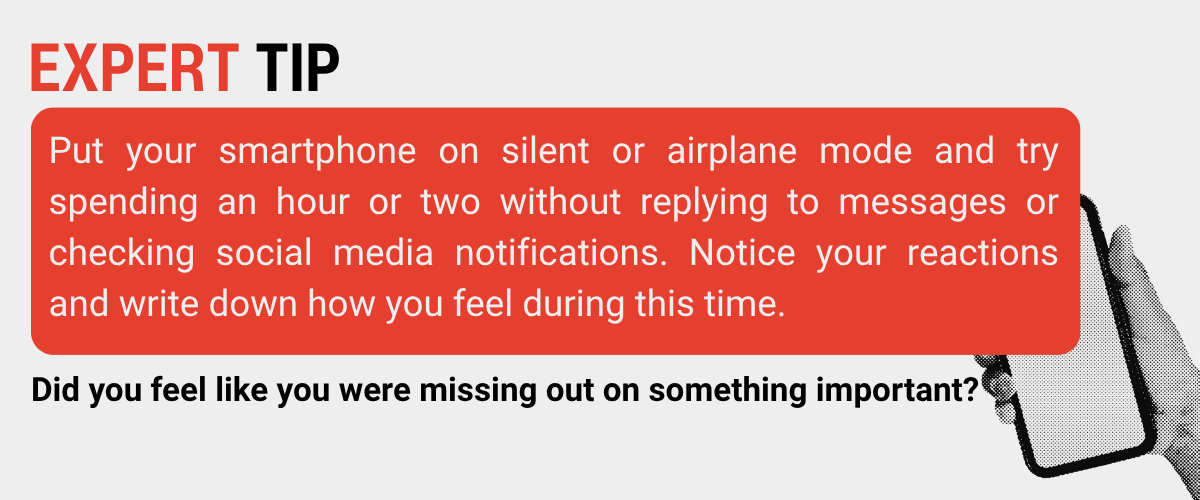
One of the biggest “time thieves” is the smartphone. Social media notifications, emails, and chat messages constantly distract us. What is more, we often cannot even explain why it is so important for us to know what is happening on Instagram or LinkedIn right now. Why can’t we check these notifications three or four hours later?
Dārta identifies FOMO (Fear of Missing Out) as one of the reasons behind this behaviour. People may feel that if they do not know what is happening on social media or in workplace communication channels, they are losing touch with those around them.
Another important factor is fear: the fear of being excluded from our social circle, much as our ancestors feared being cast out of their tribe. Although we no longer live in that kind of world, certain similarities remain ingrained in us.
The more often you practise this approach, the more clearly you will understand that not every message requires an immediate response and not every notification deserves your attention.
The more often you practise this approach, the more clearly you will understand that not every message requires an immediate response and not every notification deserves your attention.
Focus Can Be Trained Too
No one is born with perfect concentration. Just like effectiveness, the ability to concentrate can be developed throughout our lives. The first step is to create an environment in which our attention does not have to constantly “fight” against external distractions.
One state that helps us focus fully is known as the flow state, in which we become deeply and consciously immersed in completing a single task. It takes approximately 23 minutes to reach this state, with the first 10 minutes being the most challenging, as our attention tends to wander.
Wow! That sounds interesting. Could you tell me a little more about how exactly we can reach this state and why it matters?
It matters because, when we enter a flow state, two things happen: first, our sense of time fades, and second, our productivity and ability to concentrate increase.
To give yourself a real chance of reaching this state, you need to eliminate potential distractions: put your devices aside and turn off notifications. Be prepared for various thoughts to run through your mind during the first few attempts. Keep a piece of paper and a pen nearby so you can write down anything that comes to mind.
How often should we practise this?
Ideally, you should allow yourself to enter this state at least once a day. The best time is in the morning, as it helps you focus for the rest of the day. It is also a good way to build self-confidence by becoming more aware of your abilities and strengths.
Effectiveness Does Not Mean Being Productive for All Eight Hours
The amount of time we can spend on deep, focused work each day may be around two to four hours, with breaks in between. However, this depends on each person’s ability to concentrate.
Clearly, there are only 24 hours in a day, and we cannot always accomplish everything we plan. How important is the ability to say “no” to a colleague, a manager, or perhaps even ourselves?
It is extremely important. First, we need to be able to say “no” to ourselves in moments of impulse, thereby setting boundaries. Second, we need to have clear priorities that explain why we are saying “no”. This is particularly important for perfectionists and people who tend to please others or are always eager to help. Without a strong “yes” that reinforces why something else deserves our time, saying “no” becomes much harder.
Of course, there may be situations in which someone takes offence or expresses dissatisfaction. However, remember that it is impossible to do everything and please everyone. If priorities have been clearly discussed with your direct manager, it becomes much easier to turn down less important tasks.
A Culture of Effectiveness Must Not Become a Trap
When discussing effectiveness, there is also a risk of going to the other extreme and believing that every minute must be used as productively as possible. The expert does not support this approach. An effectiveness-driven culture is important within a company, but that certainly does not mean people must be constantly on the go.
The goal is not to turn people into robots or continuously operating systems. On the contrary, it is about understanding how to make the smartest possible use of employee resources—time, energy, and attention—which are all available in limited quantities.
A Simple Habit You Can Introduce Today
Changing your work routine does not require complicated systems or dozens of new productivity apps. Dārta recommends taking a few minutes the day before to identify the three most important tasks to complete the following day and immediately adding them to your calendar. It is also important to decide what you will work on during the first two hours of your working day.
Being able to define your key tasks before emails, messages, meetings, and colleagues’ priorities begin to fill your day is extremely important. These small steps take no more than 10 minutes but can change the entire trajectory of your career.
If You Never Have Enough Time, Look for the Underlying Causes

Photo: Magnific.com
Anyone who regularly feels overwhelmed at the end of the day but sees little meaningful progress towards their goals should start by honestly assessing their daily routine and answering the following questions:
- What distracts me most often?
- In what order do I complete my tasks?
- How often do I check my phone?
- How much time do emails and messaging take up?
- Have I defined my main priorities for the day?
If the first thing we reach for when we open our eyes in the morning is our phone, we signal to our brains that they need to remain in a constant state of reactivity.
If we have worked or lived according to a particular routine for years, our nervous system may experience significant stress when we suddenly cut off all signals from the outside world. Once those signals disappear, we may feel insecure or anxious. That is why we should introduce new habits gradually, listening to our bodies and treating ourselves with patience and understanding.
In Business, Effectiveness Is a Financial Matter
Improving effectiveness can deliver tangible economic benefits to a company: reducing costs, freeing up employees’ time, increasing production or service capacity, and improving profit margins. International sources examining the cost of inefficient processes also highlight the scale of the problem. Various studies and industry analyses suggest that companies can lose a substantial amount of working time and even 20–30% of their revenue due to inefficient processes.
However, these benefits cannot always be translated directly into monetary terms, as some are strategic in nature. For example, a team may become more predictable, management may gain access to better data, decisions may be made faster, and the company may become better prepared to adapt to change. Effectiveness is therefore often a matter of both financial performance and organisational health.
Less Chaos, More Mindful Attention

Photo: Magnific.com
Dārta also compares effectiveness to entropy: everything in the world tends towards disorder and chaos. If we do not wash the dishes or clean our homes, it does not take long for things to become so disorganised that we can no longer function properly in our own space.
The same applies to our work environment, task lists, emails, and everything else.
If we develop the habit of tidying our homes every day and clearing our email inbox until no messages remain, the system can work. It is not enough to do this once a week or less frequently; it needs to be a consistent, day-to-day process.
Effectiveness is not about doing as much as possible. It is about understanding what matters most today and how to use our time, energy, and attention as wisely as possible to accomplish the tasks that matter most.
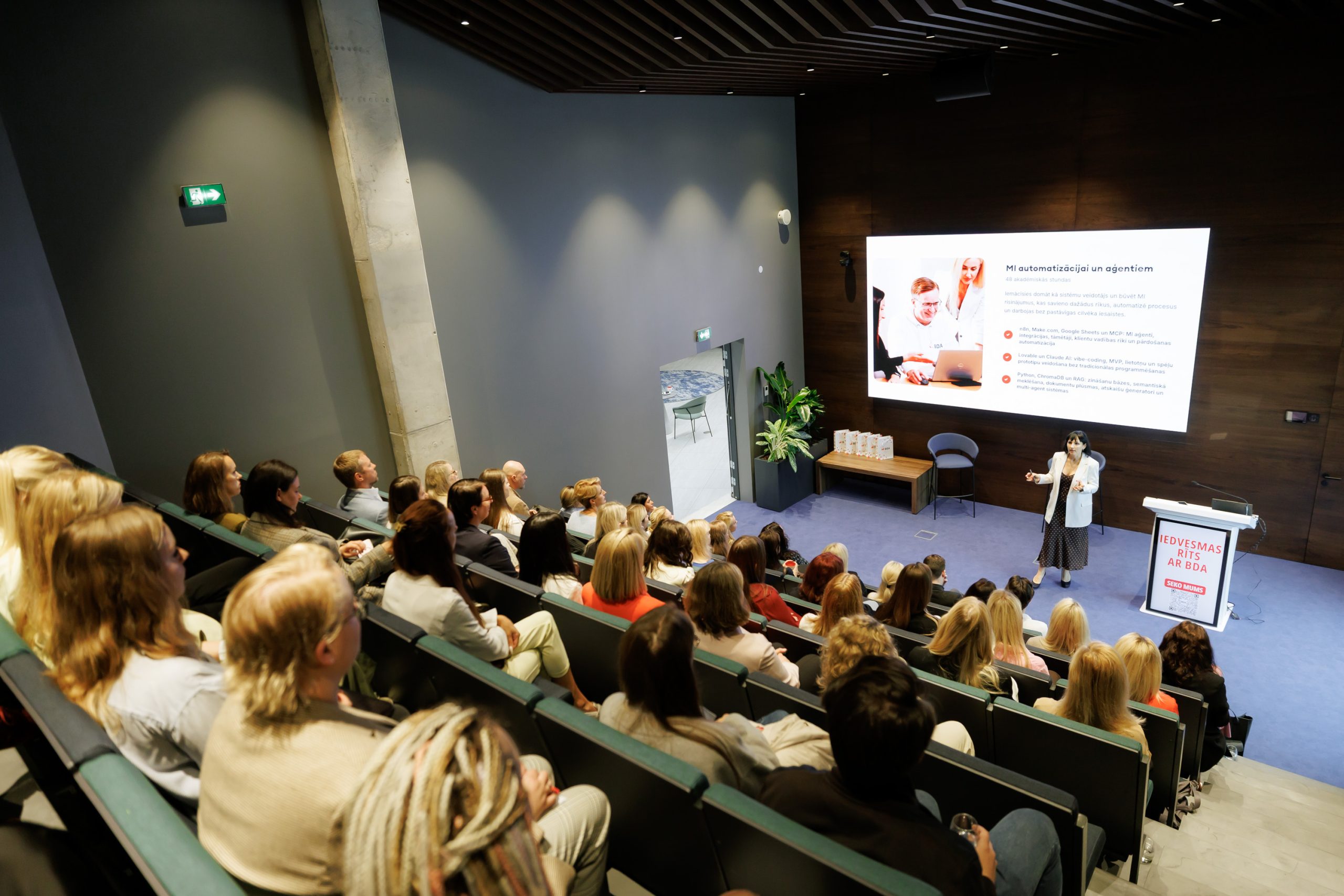
In Dārta’s course, Efficiency: Attention, Priorities and Time Management, you will learn and practice the fundamental principles of attention management, prioritization, and effective time planning. You will also gain practical skills to build a clear, structured system for managing your everyday tasks.
Boost your effectiveness by learning where and how to invest your resources!
Recent Posts