

ERASMUS+ project “Exploring the AI Frontier: AI-Driven Cyber Risk Management for SMEs (AID)”
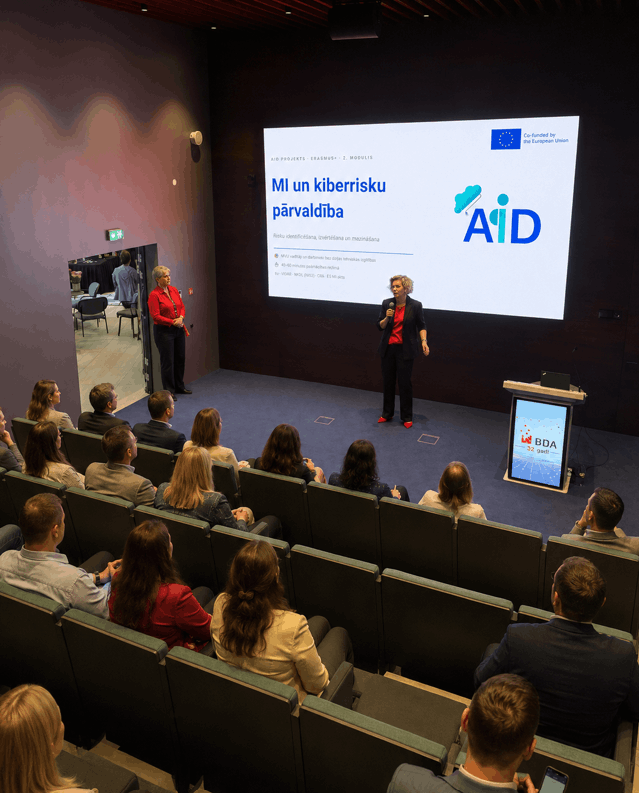
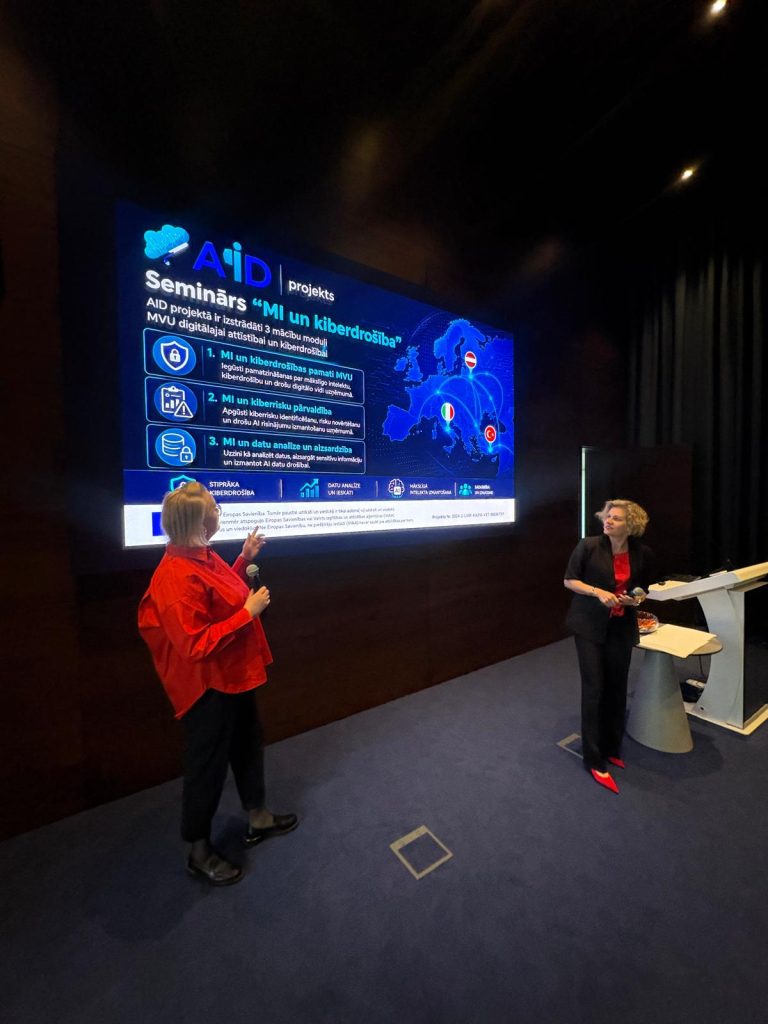
Project Workshops brought together SMEs and stakeholders
Other news
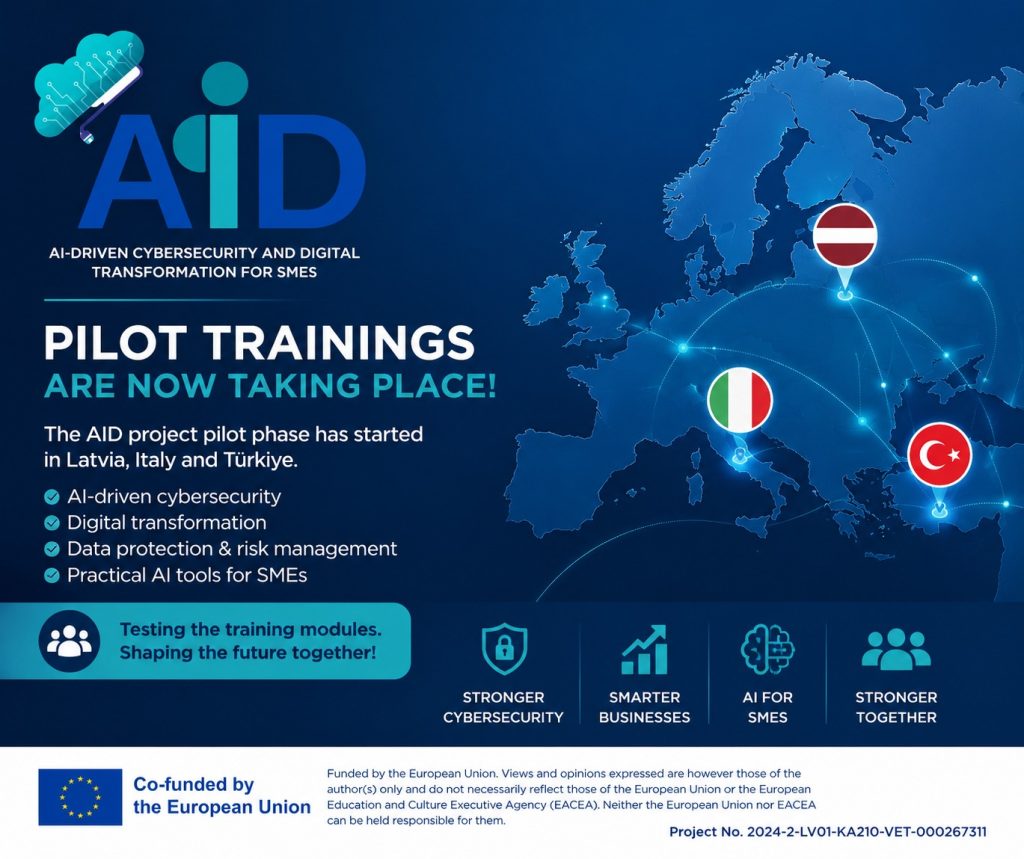
🔹 AI-driven cybersecurity
🔹 Digital transformation
🔹 Data protection and risk management
🔹 Practical AI tools for SMEs.
The AID Project’s digital learning environment is taking shape. What started as research has evolved into a concrete platform concept — grounded in real data collected from SMEs across Latvia, Italy, and Türkiye. The findings were clear: businesses are aware of cyber threats, but awareness alone doesn’t translate into action.
That gap is exactly what we’re designing for.
Built on Moodle and shaped by SME feedback, the platform provides: Presentations and visual infographics replace lengthy manuals, because that’s what our research showed people actually use. Tools You Can Use Immediately — Simple checklists and AI-powered guides designed for day-one implementation, not theoretical reading. Business-Oriented Learning — Technical cybersecurity skills are framed around real business outcomes. Learn on Your Terms — Self-paced and accessible anywhere, designed for professionals who can’t commit to fixed schedules.
Building digital resilience shouldn’t add to your workload — it should strengthen how your business operates.
 Presentations and visual infographics replace lengthy manuals, because that’s what our research showed people actually use. Tools You Can Use Immediately — Simple checklists and AI-powered guides designed for day-one implementation, not theoretical reading. Business-Oriented Learning — Technical cybersecurity skills are framed around real business outcomes. Learn on Your Terms — Self-paced and accessible anywhere, designed for professionals who can’t commit to fixed schedules.
 Evidence-Based Content: We are replacing dense manuals with interactive PPTs, videos, and infographics—a direct response to the multimedia needs expressed by SMEs in our survey. Practical Implementation: Our focus is on ready to use tools—developing simple checklists and AI-driven guides that can be used from day one. Strategic Learning: We are linking technical skills to business outcomes through real-world case studies, ensuring security is integrated into company strategy. Flexible & Autonomous: Designed for the busy professional, the platform will support self-paced learning—accessible whenever and wherever you need it.
 What’s inside the article:
 Key research findings on AI & cybersecurity skills gaps. AID Competence Map aligned with DigComp. Development of practical training modules for SMEs. Upcoming pilot trainings in Latvia, Italy and Türkiye.
Through research, an international SME competence gap survey, and the development of a cybersecurity competence model, the project identifies key skills and practical needs related to AI, cyber risk management, and data analysis.
Detailed information is available in the “AID Project Completes First Key Research Deliverable” section on this website.
About the project
The AID project empowers small and medium-sized enterprises (SMEs) to tackle cybersecurity challenges through AI-based solutions. By developing a tailored Competence Map and a practical Cybersecurity Toolkit, the project enhances digital resilience and equips SME employees and managers with essential AI-driven cybersecurity skills. The initiative includes pilot training sessions and public workshops to promote awareness and hands-on learning.
Building on a previously submitted project, this revised proposal reflects partner feedback and aims to contribute to the digital transformation of SMEs across Europe. Key outcomes include improved risk assessment capabilities, increased digital safety, and a stronger foundation for data-driven decision-making in the SME sector.
Project Number:
Nr. 2024-2-LV01-KA210-VET-000267311.
Programme:
Erasmus+ KA210-VET – Small-scale Partnerships in Vocational Education and Training.
Duration:
01 March 2025 – 31 May 2026 (15 months).
Total Grant:
€60,000.
Coordinator:
BDA (Latvia)
Partner Organizations:

Training 2000 (Italy)
Information about the project in Italian is available HERE

Muğla Sıtkı Koçman University (Türkiye)
Information about the project in Turkish is available HERE
Project Aim:
The AID project supports SMEs in improving their cybersecurity readiness using AI-powered tools and training. It delivers a competence map, a practical toolkit, and pilot training to help SMEs assess and enhance their ability to manage AI-related cyber risks.
How the AID Project Responds to Real Needs?
The AID project is grounded in a thorough needs analysis carried out from December 2023 to January 2024. Partners from Latvia, Turkey, and Italy worked together to assess the cybersecurity and digital readiness needs of SMEs and training institutions.
Through stakeholder interviews, surveys, and data analysis, the project identified key gaps in skills, preparedness, and awareness. Input was gathered from SMEs, VET providers, and other stakeholders across partner countries. These insights helped shape the project’s competence map, training tools, and overall strategy—ensuring the outcomes are relevant, practical, and aligned with real-world challenges.
AID Project Develops Cybersecurity Competences Model for SMEs
The AID project – Exploring the AI Frontier: AI-Driven Cyber Risk Management for SMEs has reached another key milestone with the development of the AID Competence Model, defining core competences in cybersecurity, cyber risk management, and data analysis for SMEs.
Building on the project’s research and survey results, the competence model translates identified needs into clear behaviors, skills, knowledge, and attitudes, with a strong focus on practical application and responsible use of AI technologies. It provides a structured foundation for targeted training and capacity building in SMEs.
This deliverable is a crucial step toward the creation of the AID Competence Map and training toolkit, ensuring that future project outputs support SMEs in strengthening digital resilience, informed decision-making, and AI-aware cybersecurity practices.
-
SMEs are the primary beneficiaries, receiving tools and training tailored to their cybersecurity needs
-
SME Employees gain new skills through practical training focused on AI-enhanced cybersecurity.
-
SME Owners and Managers are empowered to make informed decisions on cyber risk management.
-
VET Institutions can integrate the project’s resources into their curriculum to improve training relevance.
-
Policymakers and Regulators benefit from best practices that support the development of cybersecurity policies.
-
Community and Industry Networks use project outputs to raise awareness and promote cyber safety.
-
Professional Associations and NGOs can apply the materials to support member development and advocacy efforts.
AID project results
The AID project will deliver practical, impactful outcomes that help small and medium-sized enterprises (SMEs) strengthen their cybersecurity through AI-based solutions.
The following key results will be achieved:
- AI-Driven Competence Map
A structured, multilingual map identifying essential cybersecurity and AI-related skills SMEs need to protect their digital operations.
Helps SMEs assess current competencies and identify skill gaps.
- Tailored Cybersecurity toolkit
A practical, easy-to-use toolkit with real-life case studies and resources to support SMEs in implementing AI-enhanced cybersecurity practices.
Includes step-by-step guidelines and tools designed specifically for SME contexts.
- Pilot Training for SMEs and VET providers
Hands-on training sessions involving SME representatives and vocational education providers to test and improve the toolkit and competence map.
Builds real-world capacity and practical knowledge among users.
- Digital Learning platform
An online space with open access to project resources, training materials, and updates via Facebook and Instagram.
Ensures wide and inclusive access to knowledge and tools.
- Public dissemination workshops
Interactive events in Latvia, Italy, and Turkey to showcase the project’s results to SMEs, educators, policymakers, and industry stakeholders.
Encourages knowledge sharing and promotes adoption of AI-based cybersecurity strategies across Europe.
BDA



Training 2000



Muğla Sıtkı Koçman University (MSKU)



If you have any questions or concerns about the project, please feel free to contact us by emailing at bda@bda.lv!
 Funded by the European Union. Views and opinions expressed are however those of the author(s) only and do not necessarily reflect those of the European Union or The State Education Development Agency (VIAA). Neither the European Union nor the granting authority (VIAA) can be held responsible for them.
Social media posts
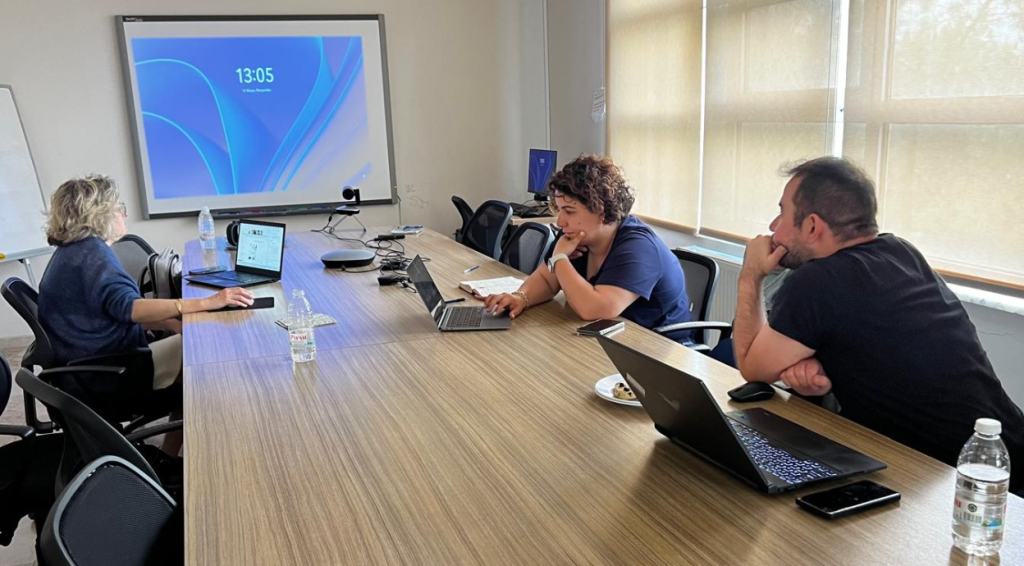
 Finalized the AI-Driven Cybersecurity Toolkit based on feedback from SMEs and VET providers Discussed long-term accessibility of the digital learning environment Explored opportunities for integrating the AID Toolkit into VET education and future cooperation initiatives.
 Validation and workshop preparation: Finalizing our AI-Driven Cybersecurity Toolkit based on pilot feedback from 45 SMEs and VET providers across partners countries.This sets the stage for our upcoming public workshops in each country! Impact: Ensuring our digital learning environment stays open and accessible for everyone long after the project ends. Sustainability: Partnering with Vocational Schools (VET) to integrate the AID Toolkit and its training resources into national curricula. Future Cooperation: Designing the next steps for AI-driven safety in Europe. Evidence-Based Content: We are replacing dense manuals with interactive PPTs, videos, and infographics—a direct response to the multimedia needs expressed by SMEs in our survey. Practical Implementation: Our focus is on ready to use tools—developing simple checklists and AI-driven guides that can be used from day one. Strategic Learning: We are linking technical skills to business outcomes through real-world case studies, ensuring security is integrated into company strategy. Flexible & Autonomous: Designed for the busy professional, the platform will support self-paced learning—accessible whenever and wherever you need it. Evidence-Based Content: We are replacing dense manuals with interactive PPTs, videos, and infographics—a direct response to the multimedia needs expressed by SMEs in our survey. Practical Implementation: Our focus is on ready to use tools—developing simple checklists and AI-driven guides that can be used from day one. Strategic Learning: We are linking technical skills to business outcomes through real-world case studies, ensuring security is integrated into company strategy. Flexible & Autonomous: Designed for the busy professional, the platform will support self-paced learning—accessible whenever and wherever you need it.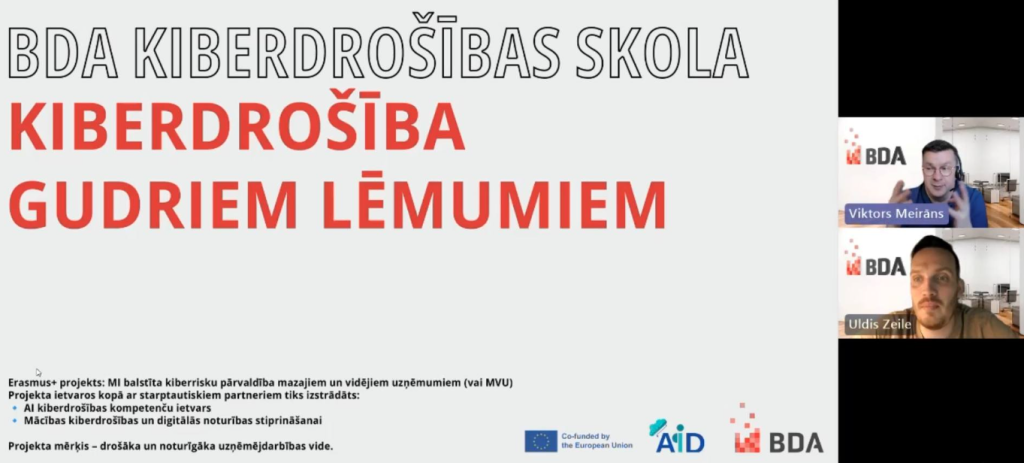
 On March 19, BDA as a leading Erasmus AID project partner hosted a highly engaging webinar focused on building essential cybersecurity knowledge and skills.
Participants explored: why earning the CompTIA Security+ certification is a valuable step in a cybersecurity career the 5 critical cybersecurity domains how modern cyberattacks are planned and why they are often hard to detect
The session was led by cybersecurity expert Viktors Meirāns, who also addressed key challenges SMEs face in ensuring secure IT operations.
The webinar attracted a wide audience and provided practical insights, highlighting how important up-to-date knowledge and internationally recognized certifications are for strengthening digital resilience.
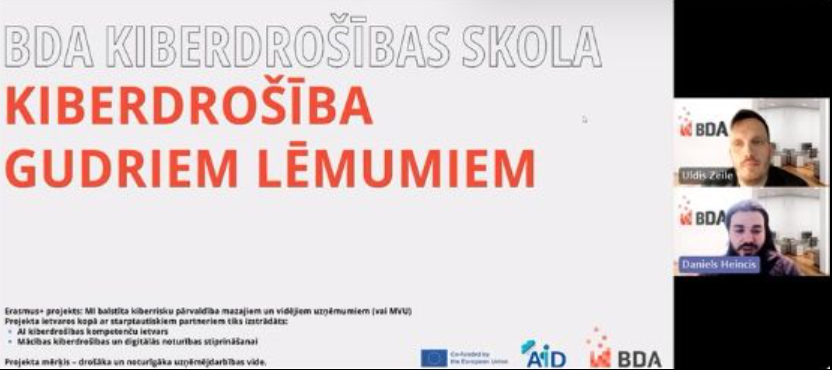
We are proud to share that the webinar “Cybersecurity Basics for Every Professional” has successfully taken place on February 24.
Organised by BDA – one of the leading training providers in Latvia and the Baltic region – the webinar brought together participants from SME and other interested in strengthening their understanding of cybersecurity risks and safe behaviour in the digital environment.
During the session, cybersecurity expert Daniels Heincis shared practical insights on the most common cyber threats, simple ways to improve cyber hygiene, and the latest cybersecurity trends affecting both individuals and businesses.
This webinar is closely aligned with the objectives of the Erasmus+ project “Exploring the AI Frontier: AI-Driven Cyber Risk Management for SMEs (AID)”, which focuses on strengthening cybersecurity awareness and digital resilience among small and medium-sized enterprises across Europe.
Nr. 2024-2-LV01-KA210-VET-000267311
Through initiatives like this webinar, the project aims to help professionals and organisations better understand cyber risks and develop the skills needed to navigate the rapidly evolving digital landscape.
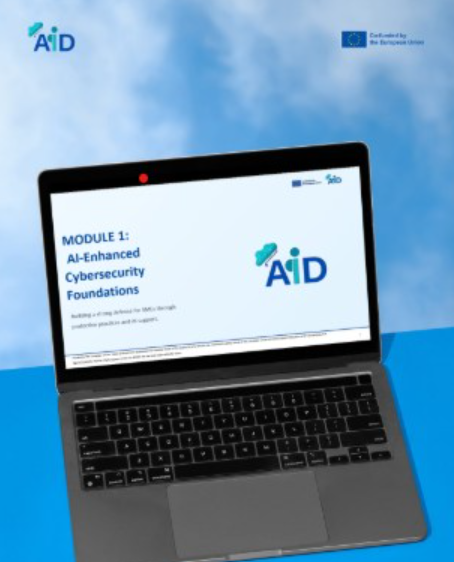
Based on the International Report on SME Digital Competence Gap Survey Results in Italy, Latvia, Türkiye, the AID Competence Map is a strategic blueprint that defines the knowledge, skills and attitudes SME managers and employees need to navigate AI-driven cyber risks.
But we aren’t leaving the theory on the shelf.
We are currently transforming this map into three practical training modules, developed as Open Educational Resources (OER) for VET trainers and SMEs:
Module 1: Foundations – Using AI to automate cyber hygiene and phishing detection.
Module 2: Risk Management – A “low-resource” model to score and mitigate risks using AI-enhanced tools.
Module 3: Data Protection – Mapping data flows and using AI for anomaly detection without compromising privacy.
By making these resources open and adaptable, we ensure that every VET provider in Europe has the tools to train a new generation of resilient, AI-aware workers.
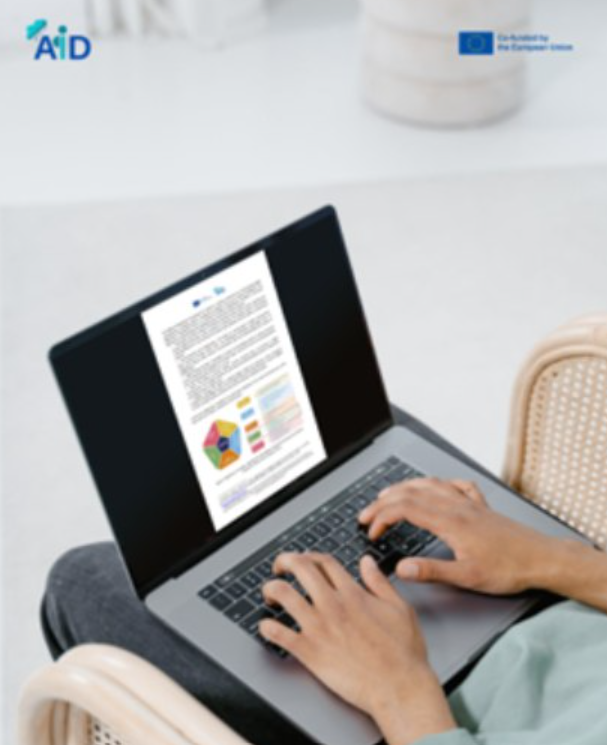
We are proud to announce the completion of our first key research deliverable: the study “Competency Research for Digital Adaptation and Growth in SMEs.”
This research provides a rock-solid evidence base for the AID Project, analyzing the specific AI, cybersecurity, and data analysis competences required by SMEs in Latvia, Italy, and Türkiye. By combining market analysis with national policy insights, we have identified the primary hurdles SMEs face in their digital journey: Skills Shortages – The gap between tech evolution and workforce capability. Limited Resources – The struggle to balance innovation with daily operations. Regulatory Complexity – Navigating the evolving landscape of AI and data laws. Cybersecurity Risks – Protecting assets against increasingly sophisticated threats.
This study is the foundation for the upcoming AID Competence Map and our Training Toolkit. We are ensuring that every solution we build is relevant, targeted, and aligned with the real-world needs of European small businesses.
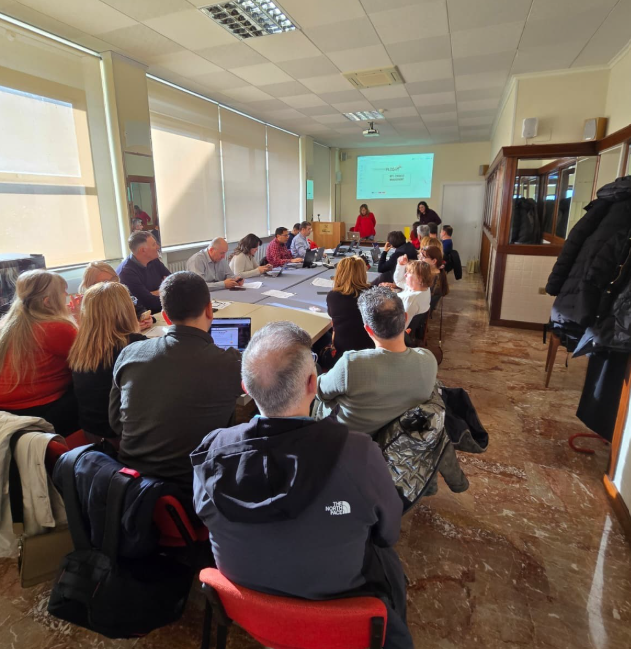
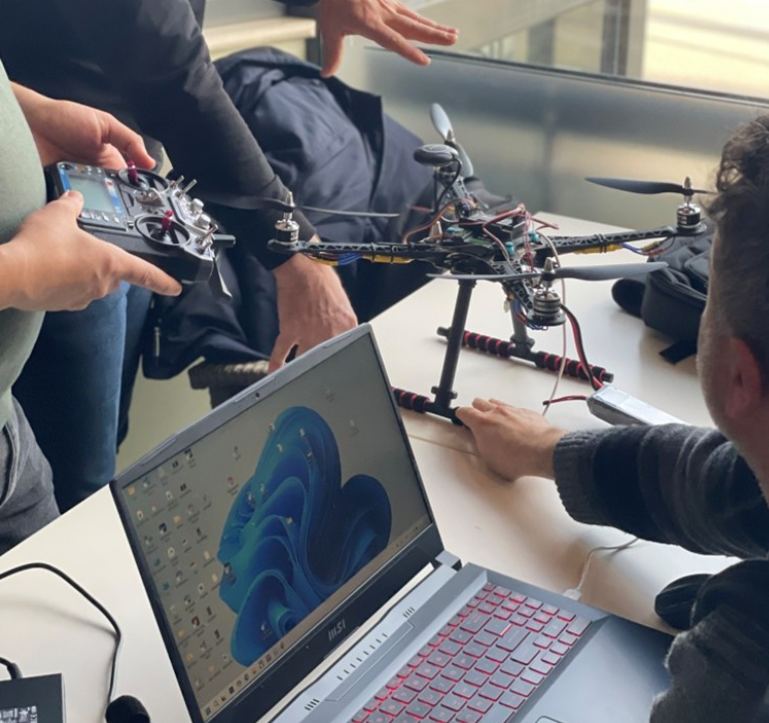


The AID project – Exploring the AI Frontier: AI-Driven Cyber Risk Management for SMEs has developed the AID Cybersecurity Competence Model, defining key competences in cybersecurity, cyber risk management, and data analysis for SMEs.
Built on research and SME survey results, the model turns real needs into practical skills, knowledge, and behaviours, with a strong focus on responsible and AI-aware cybersecurity practices.
 This milestone lays the foundation for the AID Competence Map and training toolkit, helping SMEs strengthen digital resilience and informed decision-making.
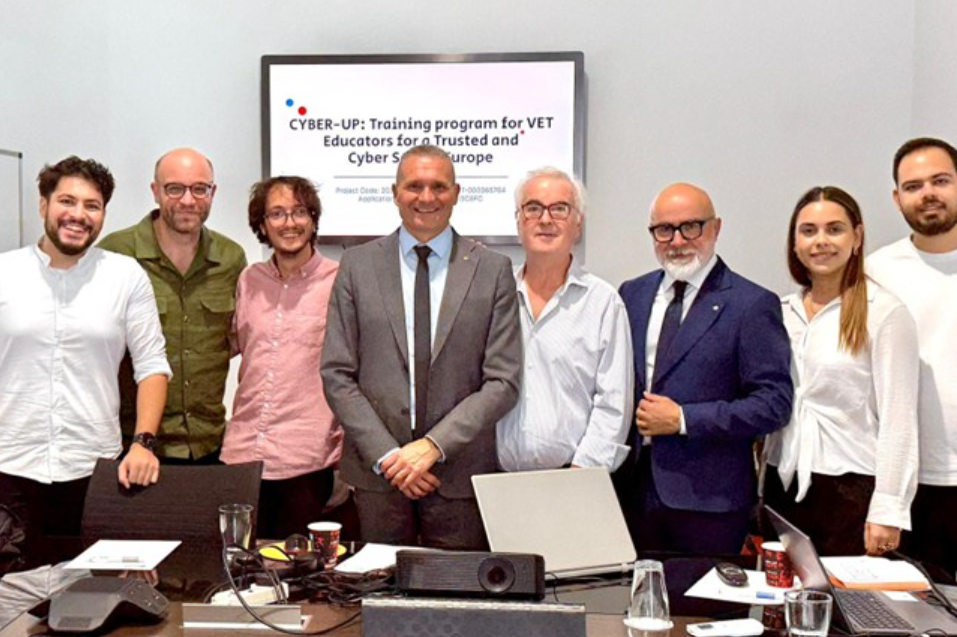
In October 2025, we held a high-impact dissemination event in Cyprus, hosted during an international gathering organized by the CYBERUP project team.
Our Italian partner – Training 2000– participated to this event in close collaboration with the Trade Association of SMEs of the Marche Region. This bridge between VET providers and regional business associations is exactly what is needed to bring high-level security tools directly to the local workforce.
The alignment of these two Erasmus+ initiatives dedicated to the Vocational Education and Training (VET) landscape was inspiring for international participants from Italy, Bulgaria, Greece and Cyprus. While our focuses differ, our goal is the same: providing the tools and knowledge necessary for SMEs to thrive in an increasingly digital world.
We recognize that cybersecurity and cyber risk management competences are no longer niche skills: they are now central to every type of SME across Europe, regardless of sector. Whether a business is in manufacturing, retail, or services, digital resilience is the backbone of business continuity.
The AID project continue its journey in exploring AI-driven risk management, developing a up-to-date Competence Map and Toolkit to navigate the “double-edged sword” of Artificial Intelligence.
A huge thank you to our partners and the consortium for this inspiring exchange of expertise! 

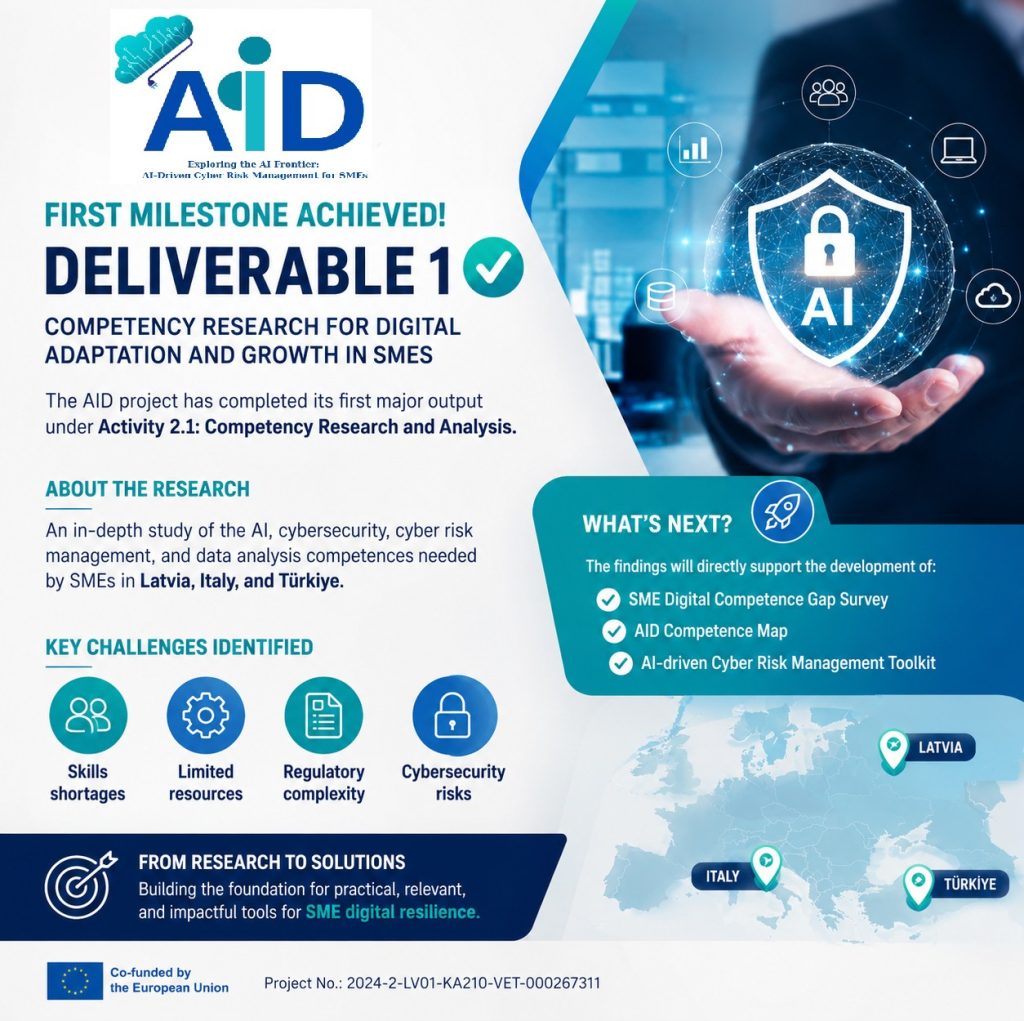
The AID Project continues building a stronger digital future for SMEs through AI-driven cybersecurity competences and practical digital resilience tools.
 Our newly completed competency research provides valuable insights into: Artificial Intelligence Cybersecurity Cyber Risk Management Data Analysis.
The research will guide the next project outputs designed especially for SMEs and vocational education professionals
 For VET trainers:
The AID project will support training strategies that respond to real labour market needs.
 For SMEs:
The project will help identify competence gaps and strengthen digital readiness against emerging cyber threats.
Together, we are shaping a smarter and safer digital ecosystem for SMEs across Europe.
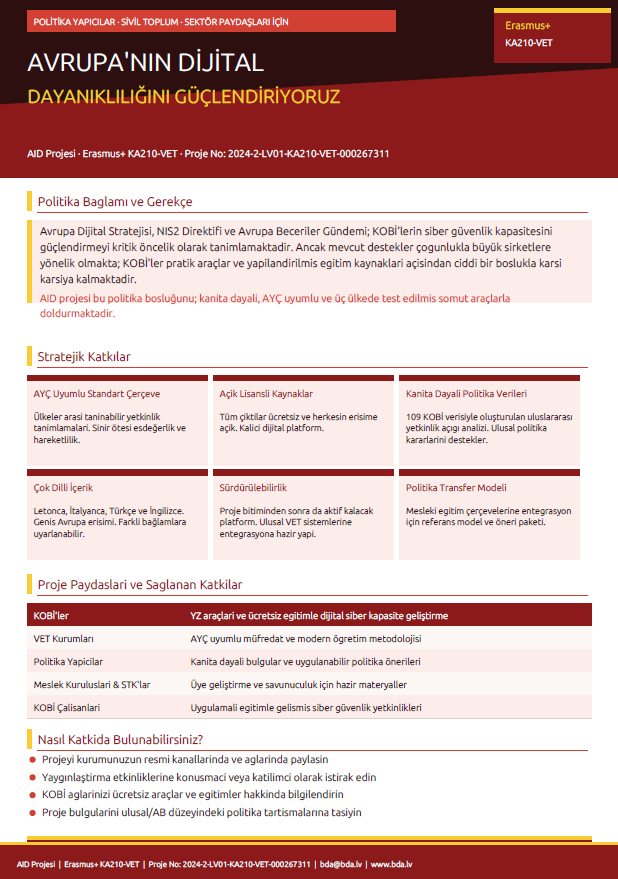
 Why does it matter? EQF-aligned competence frameworks Open-access multilingual resources Policy-oriented evidence from 109 SMEs Sustainable digital platforms Transferable VET integration models. We invite institutions, networks, NGOs, and policy actors to collaborate and support the dissemination of practical AI-driven cybersecurity solutions for SMEs.
 AID project will produce these for you!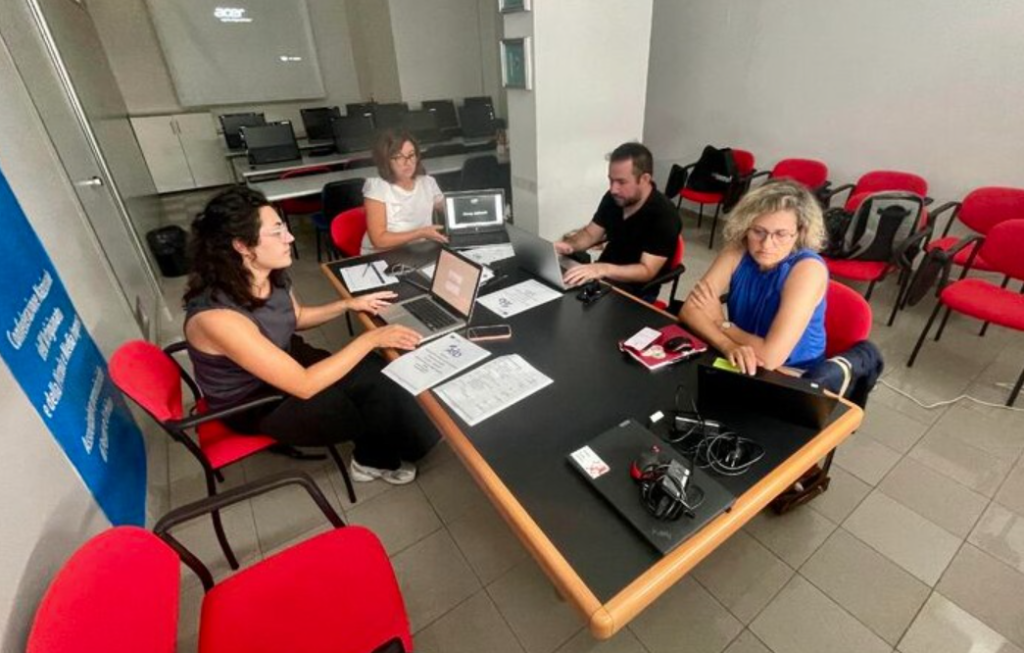
Reviewing research conducted in three countries on the competences needed for cybersecurity literacy and their relevance to SME operations; Developing the project’s competence map; Reviewing the first version of the cybersecurity toolkit designed for both SMEs and vocational education providers; Planning the next steps for upcoming pilot training. We are honored to be the lead partner of this project and to contribute significantly to strengthening the digital resilience of SMEs through innovative AI-driven tools and solutions. These findings directly shape the AID Competence Map and upcoming AI-driven Cyber Risk Management training solutions, ensuring they are practical, relevant, and grounded in real SME needs.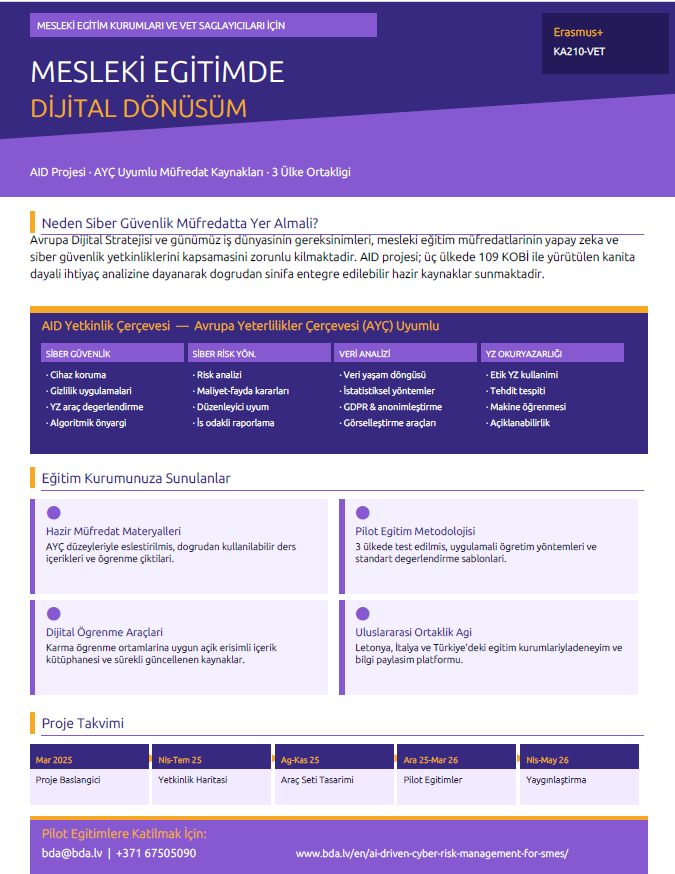
The AID Project brings together partners from Latvia, Italy, and Türkiye to help SMEs manage cyber risks through AI-supported tools and practical training solutions.
What will AID deliver? AI Competence Map Cybersecurity Toolkit Online Learning Platform Practical Training Sessions Dissemination & Awareness Activities.
The project already involved 90 SMEs in competence and budget mapping activities and continues developing sustainable resources for vocational education and SME ecosystems.
 AID project will produce these for you!
Stay tuned and follow us for upcoming tools, training opportunities, and digital resources.
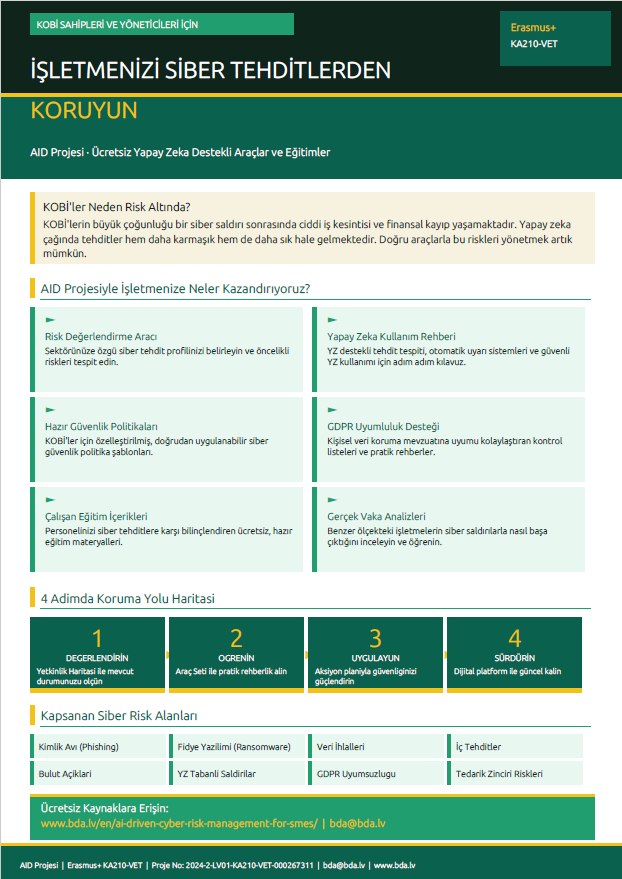
Risk assessment tools AI-supported cybersecurity guidance GDPR compliance support Ready-to-use security policies Staff training materials Real case studies. In today’s AI era, cyber threats are becoming more frequent and more complex. SMEs need practical and affordable solutions to stay secure and competitive. AI-driven cybersecurity tools Competence mapping resources Practical guidance for SMEs Free educational materials. Follow us and stay updated!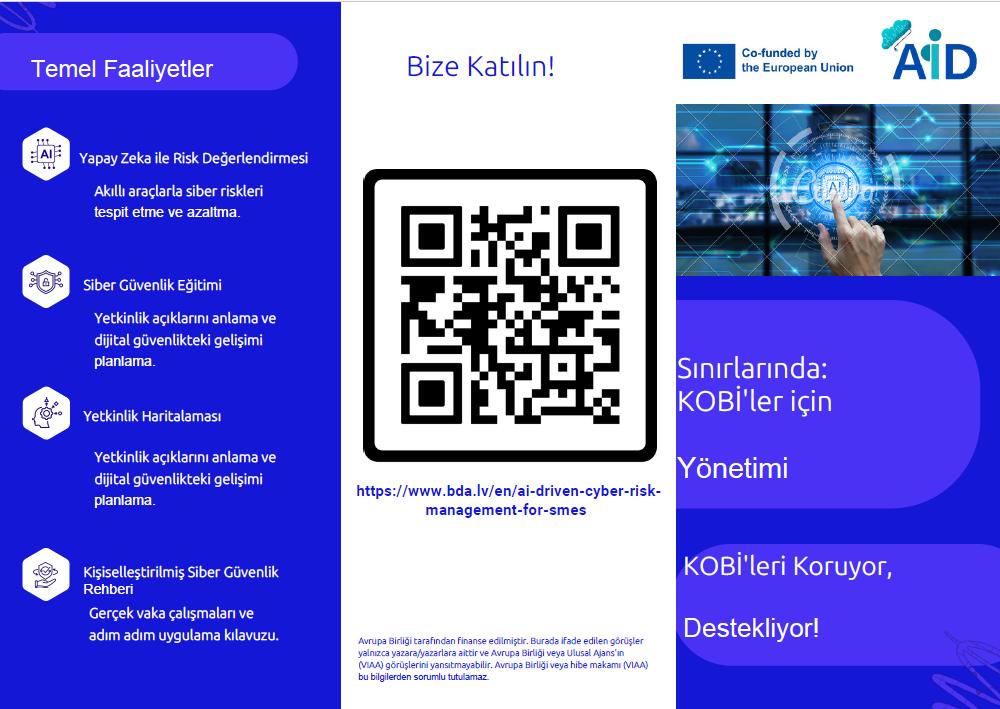
The AID Project supports vocational education providers with EQF-aligned curriculum resources, pilot methodologies, digital learning tools, and AI & cybersecurity competence frameworks.
AI Literacy Cybersecurity Cyber Risk Management Data Analysis.
Through evidence-based research conducted with SMEs in Latvia, Italy, and Türkiye, AID develops practical resources that can be directly integrated into vocational education and training.
For trainers and VET institutions:
AID project will produce these for you! Ready-to-use teaching materials Pilot training methodologies Digital learning tools International collaboration opportunities Stay tuned and follow us!
Follow us on social media


facebook.com/aid.erasmus.bda instagram.com/aid_erasmus_project_bda/