Artificial Intelligence: Threat or Opportunity?
05.03.2026

Photo: Freepik.com
Technologies, new solutions, and opportunities have always sparked both excitement and concern, as well as uncertainty. In recent years, artificial intelligence has become one of the most widely discussed topics, and public opinion about it remains divided. Some see it as an unprecedented opportunity for development, while others perceive it as a threat that will take away jobs, destroy creativity, and ultimately weaken natural human intelligence. What causes these fears, and are such reactions justified? In this blog article, we will explore the main reasons behind these attitudes and share useful tips on how to turn technological opportunities into advantages.
Fear of Losing Jobs
One of the most common reasons for concern is the belief that artificial intelligence will take away jobs and that algorithms will replace people. In reality, automation is neither new nor unique. For example, machines have long been performing part of the physical work in factories and production facilities, from manufacturing products to packaging them.
In other sectors, technology has gradually taken over routine tasks as well. In the banking sector, payments and financial transactions now largely take place digitally, while in logistics, automated systems help plan cargo flows. A similar development has occurred in office work: document management, data processing, and information retrieval are increasingly automated through various digital tools.
Digitalization has created new opportunities and, at the same time, new professions. Tasks and responsibilities may change, but human presence and knowledge still provide irreplaceable added value.
Fear often arises not from technological progress itself, but from uncertainty. That is why it is helpful to ask yourself several questions:
-
What skills do I need to remain competitive?
-
Will I be able to adapt to new labor market demands?
-
Will I have the time and willingness to learn something new?
The Feeling of Losing Control
For people, it is important to feel that we can control and influence situations. When a system begins making decisions autonomously — without our involvement — it can create a sense that responsibility is slipping out of our hands.
When we hear that artificial intelligence is being used to create job advertisements, review potential employees’ CVs, forecast market risks, write texts, and generate images, it raises a question: where does the human role and expertise remain?
It is important to remember that technology is only a tool, while final decisions still remain in human hands.
The Unknown Is Always Frightening
Psychology has long recognized a principle: people fear what they do not understand or have not yet encountered. The development of the internet was initially approached with caution, and skepticism continued even as social networks rapidly expanded.
A similar situation can be seen today, when some people perceive artificial intelligence as something mysterious or even dangerous.
In reality, technological development usually happens gradually, step by step, and its implementation occurs in a controlled way and environment.
Threats to Self-Worth and Existing Competencies
Another reason for fear is related to professional identity. If someone has spent 15 or 20 years intentionally building a career in a specific field, the idea that some of their knowledge and skills could be automated or replaced may feel like a personal threat.
It is true that artificial intelligence can perform certain tasks for us. However, this does not mean that humans become unnecessary. On the contrary, roles are shifting — from executor to process manager; from manual work to strategic planning.
Information Overload and Chaos
Anxiety is also fueled by the enormous volume of information. Every week we hear about new tools and even more powerful models.
Without a clear structure, this flow of information can indeed create stress and uncertainty. Stress is often interpreted as fear of technology, although the real reason may simply be a lack of knowledge.
Ethical and Security Concerns
It is only natural that we want our data to remain safe and that automated processes do not lead to incorrect decisions. These concerns help encourage responsible technological development and use.
Understanding how intelligent technologies are trained, how data protection works, and how new technological solutions are implemented can significantly reduce anxiety.
How to Overcome Fear and Gain Confidence?

Photo: Freepik.com
Fear cannot be overcome using the “ostrich method” — deliberately ignoring everything happening around us. Instead, it is important to develop understanding by broadening our perspective and gaining new knowledge, which builds confidence in ourselves and our abilities. That is why structured and purposeful learning is so important.
From Fear to Understanding and New Opportunities
Changing perspective can make a huge difference. Instead of focusing on whether technology will replace you, focus on how you can use it to your advantage — to save time and increase efficiency.
This shift in thinking transforms anxiety into proactive action. It allows people to regain control and consciously shape their professional development path.
Companies also play a very important role in this process. Employers must create a safe environment where employees can grow, learn, make mistakes, discuss ideas, and experiment. The greater the collective understanding within a team, the less resistance employees will show toward change.
Reliable Sources of Information
News about technologies, tools, and solutions is often accompanied by sensational headlines and exaggerated predictions. While they attract attention, they do not always provide a realistic or objective view of the situation.
Instead, choose reliable sources of information, such as:
-
industry experts,
-
academic research,
-
professional education platforms,
-
trusted training centers.
Developing Critical Thinking
What matters is not only what we read, but also how we interpret it. Critical thinking helps distinguish between real facts and subjective speculation.
Regardless of the content or format you choose, it is always important to understand whether the information is based on data and evidence, and whether concrete examples or research results are provided.
Continuous Learning
Technology evolves rapidly, which means knowledge acquired a year or two ago may already be less relevant. Continuous development of knowledge and skills is important for everyone — regardless of age, position, or professional experience.
This does not mean that everyone must become a technology expert. However, staying informed about current developments helps to:
-
better understand emerging trends,
-
make objective and well-considered decisions,
-
remain competitive in the labor market.
Courses, seminars, and professional training programs are among the most effective ways to systematically and in depth acquire new skills, combining theoretical knowledge with practical application.
BDA Artificial Intelligence School – From Beginner to Professional
We all want to work less, more efficiently, and more intelligently. However, without the necessary knowledge and skills, achieving this goal can be difficult.
One of the most effective ways to overcome uncertainty about new technologies is structured learning. This is exactly the approach offered by the BDA Artificial Intelligence School, which was designed to promote understanding and help people acquire practical skills in using AI tools, data analytics, data visualization, and interpretation.
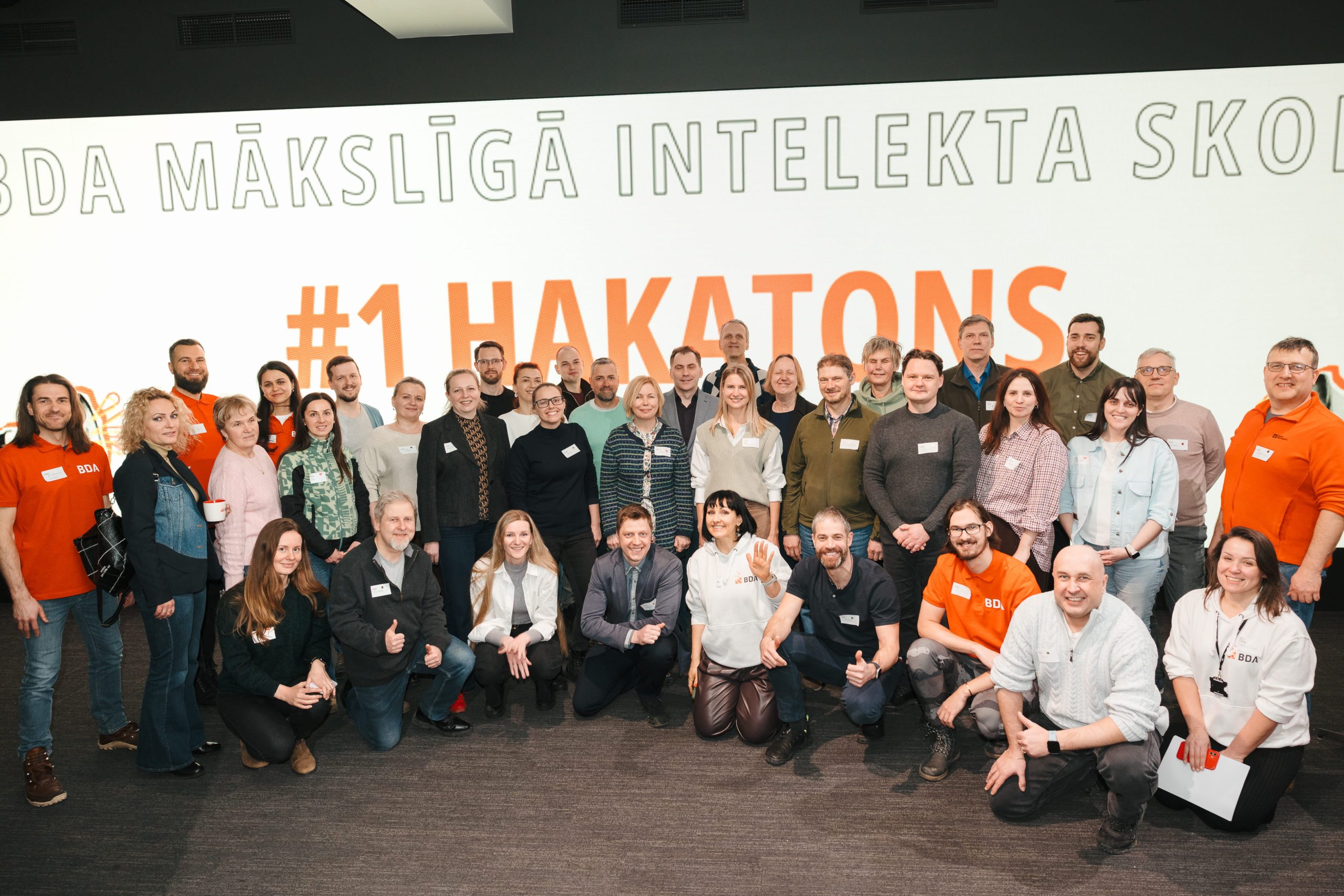
These continuing education courses include not only theoretical learning, but also practical tasks, communication with mentors, and participation in a hackathon. These self-paced studies for adults transform uncertainty into confidence — showing that artificial intelligence can become a valuable assistant in everyday work.
Self-paced learning means that program participants study remotely — at their own time and pace. Moreover, participation in this program is completely free.*
Regularly improving knowledge and skills is the best way to reduce uncertainty, fear, and anxiety. The better we understand what artificial intelligence is and how to use it to our advantage, the more confident we become in our abilities. Start today and develop the skills that will empower you to succeed in the future!
* The training is implemented within the European Union Recovery Fund project No. 2.3.1.4.i.0/1/23/I/CFLA/001 “Development of the Individual Learning Accounts Approach”.
Recent Posts